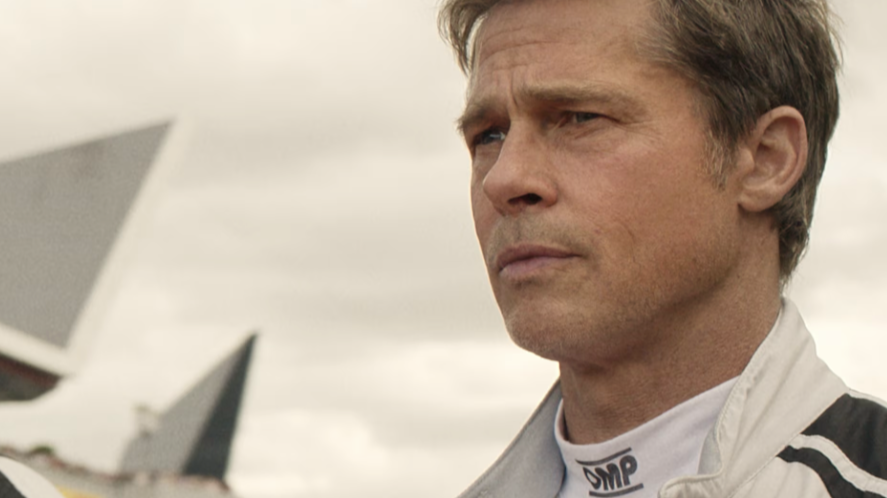
Big budgets, A-list actors and AI tools won’t save you if your story has no spine.
By Dr Erin O’Dwyer
The afternoon I saw F1 The Movie – starring Brad Pitt as a racing driver who returns to Formula One after a 30-year hiatus – just that morning I’d read about a new AI company called Scriptsee that is apparently revolutionising storytelling.
Founded by New Zealand-based animation exec Greg Harman, whose credits include Marvel’s Avengers Assemble and Guardians of the Galaxy, Scriptsee is an AI-powered platform that helps film and TV teams analyse scripts in minutes. By identifying narrative arcs and beats, it aims to help creatives deliver stronger stories and de-risk film ventures for producers and financiers.
On the one hand – how horrifying. On the other hand – most blockbusters and even some first-class storytellers could use the help. The thought stuck in my mind as I headed off to see F1.
Brad Pitt is brilliant. The script? Dire
F1is nearly two-and-a-half hours in the very pleasurable company of Brad Pitt. He is, quite frankly, the best male actor of his generation and one of cinema’s finest. There, I said it.
Don’t believe any review that says he’s an ageing hunk trying to shore up his future or worried about headlines relating to his messy divorce from Angelina Jolie. And don’t buy into the idea that it took director Joseph Kosinski – best known for 2022’s Top Gun: Maverick – to prop him up. Tom Cruise was a man in his 60s trying to look like a man in his 20s in Top Gun: Maverick. Brad Pitt is the real deal – he just gets better with age. Shame about the script.
So much money, so much machinery, so much technical expertise – and yet no beating heart of a story. As my 12-year-old son said in the car on the way home: “Lots of bells and whistles, so many holes in the story.” Bang on. Apart from a brilliant Act 1, in which Pitt’s character is asked to come back to racing by an old crony (played by Javier Bardem), the rest of the film is noise and colour.
What storytellers can learn from F1
What the film lacks at its core is what Robert McKee, one of the world’s best-known story theorists, calls the ‘controlling idea’. It’s the single line that captures what your story really means. Without it, a story has no spine, no cogent throughline – just scenes piled up on scenes.
Without a controlling idea, a story has no spine, no cogent throughline – just scenes piled up on scenes.
How the controlling idea works
The controlling idea combines a value shift (what changes – love turns to loss, ambition becomes humility, etc) and the cause (why it changes). When you know that one line, every scene in your story must serve it. If you do that, your audience will leave their seats satisfied.
If F1 had a ‘controlling idea’, it got lost in the crowd.
It may have been something like: “A man redeems his past when he risks everything to teach the next generation.”
That’s an idea that gives the speed and spectacle a spine.
But also thrown into the narrative soup were:
- A man risks everything to feel alive again – to ‘fly’ one last time.
- A man destroys himself chasing the ghost of his dead father.
- True victory comes from working together as a team.
In the end, none of these ‘controlling ideas’ were fleshed out fully, and none of the scenes meshed. Perhaps AI might have helped. It certainly couldn’t make it worse.

Why F1’s writers should have rewatched Pixar’s ‘Cars’
Long before AI, we had the Pixar Cars franchise. They are brilliant movies – watch them. In the first Cars, Lightning McQueen (voiced by Owen Wilson), is an arrogant rookie race car who gets stranded in the forgotten town of Radiator Springs where he learns that slowing down and connecting with others matters more than winning.
The ‘controlling idea’ is so simple, so clear:
“True victory comes when selfish ambition is sidelined in favour of friendship, love, learning and humility.”
Everything hangs on that. The characters. The dusty town. The redemption arc. Without it, Cars would just be two hours of mildly diverting children’s entertainment.
Thoughts for storytellers
I could watch Brad Pitt read a telephone book. That’s entertainment. But it’s not storytelling, it’s not cinema.
If you’re a storyteller working on creating a narrative arc – a founder, a leader, a writer – don’t get distracted by the bells and whistles. Don’t let AI or a big budget or the latest tech tempt you to skip the hard questions.
Ask yourself: What’s the ‘controlling idea’ in my story? What’s the throughline? What’s the spine?
Your story needs it. Your audience needs it. And if you don’t know, neither will they.
Get in touch at editor@goodprosestudios.com